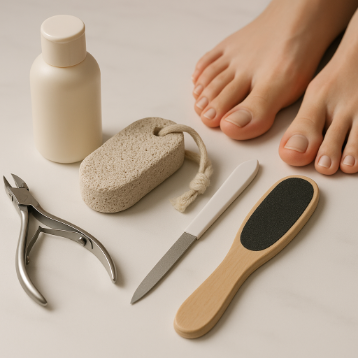
Good foot care does not begin with a crowded bathroom shelf or a salon-level kit. It begins with a few reliable tools, a basic understanding of what each one does, and the discipline to keep the process clean, gentle, and consistent. For anyone exploring Fußpflege für Einsteiger, the goal is not perfection. It is comfort, tidy nails, smoother skin, and healthier habits that are easy to maintain at home.
What Fußpflege für Einsteiger really needs
Beginners often make the same mistake: buying too much too soon. A strong starter set should help you trim nails cleanly, reduce rough skin gradually, tidy the cuticle area without damage, and keep feet moisturized. Anything beyond that is optional until you know your own needs.
The most useful toolkit is built around a simple principle: every item should earn its place. If a tool is hard to clean, too aggressive for home use, or likely to be misused, it probably does not belong in a beginner routine. This is especially true for sharp blades designed to remove thick calluses. While they are widely sold, they are not usually the best starting point for home care because it is easy to take off too much skin and create irritation.
If you are building confidence and want a more structured understanding of Fußpflege für Einsteiger, it helps to think in categories: trimming, smoothing, cleaning, and conditioning. Once you organize tools that way, shopping becomes far more practical.
The essential tools worth buying first
You do not need a large set, but you do need the right basics. The following tools cover nearly everything a beginner needs for regular home maintenance.
| Tool | What it does | Why it matters for beginners |
|---|---|---|
| Nail clippers | Trim toenails neatly and evenly | A sturdy clipper gives better control and reduces splitting |
| Nail file | Smooth edges after trimming | Helps prevent sharp corners and snagging |
| Foot file or pumice stone | Reduce rough, dry skin | Safer and easier than aggressive callus blades |
| Cuticle pusher | Gently tidy the nail area | Keeps nails looking clean without cutting living skin |
| Nail brush | Clean nails and skin folds | Improves hygiene with very little effort |
| Moisturizing foot cream | Softens dry skin and supports maintenance | Prevents roughness from building up again too quickly |
1. Nail clippers
Choose stainless steel clippers with a clean, firm cutting edge. They should feel stable in the hand and cut without tearing. Toenails are often thicker than fingernails, so a larger clipper usually works better. Straight, controlled trimming is preferable to clipping deep into the corners.
2. Nail file
A good file refines the shape after clipping. This step is often skipped, yet it makes a visible difference. It softens sharp edges and helps reduce friction against socks and shoes. For beginners, a medium-grit file is practical and easy to control.
3. Foot file or pumice stone
This is the key tool for rough heels and dry patches. Used on softened skin after bathing or showering, it helps reduce build-up gradually. The word to remember is gradually. Healthy results come from light, regular maintenance rather than harsh scraping.
4. Cuticle pusher
The cuticle area should be treated conservatively. A simple pusher, especially one with a rounded edge, can gently move excess skin from the nail plate after softening. Beginners do not need sharp cuticle nippers unless they know how to use them carefully.
5. Foot cream
The most underrated item in any home routine is a proper moisturizer. Even the best file will not help for long if the skin is left dry afterward. A richer cream used in the evening can make basic maintenance far easier over time.
How to choose better tools and avoid poor ones
Quality matters more than quantity. A small set of well-made tools is safer, easier to use, and usually more economical in the long run than a large kit filled with flimsy pieces.
- Prefer stainless steel for clippers, pushers, and other reusable metal tools because it is durable and easier to sanitize.
- Check the grip before buying. A tool that slips in your hand is more likely to lead to uneven trimming or accidental pressure.
- Avoid overly sharp specialty tools if you are new to home care. Beginners benefit from forgiving tools, not aggressive ones.
- Look for surfaces that clean easily. Textured handles can be comfortable, but they should not trap residue.
- Skip novelty kits packed with duplicate items. A cluttered set can make a simple routine feel complicated.
Hygiene is part of quality as well. Wash tools after use, dry them thoroughly, and store them in a clean case or pouch. Do not share foot care tools casually, especially clippers and files. If a tool begins to rust, dull, or develop cracks, replace it rather than trying to stretch its life.
A simple Fußpflege für Einsteiger routine at home
The best tools only matter if the routine is realistic. For most beginners, a short weekly or biweekly session is enough for maintenance.
- Clean and soften the feet. Wash them well or care for them after a shower when the skin is softened.
- Trim nails carefully. Cut in small sections rather than taking one large bite across the nail.
- File the edges. Smooth the shape to remove rough corners.
- Use a foot file lightly. Focus on heels and visibly rough areas, avoiding over-filing.
- Tidy the cuticle area gently. Only push back softened excess skin; do not force it.
- Brush and rinse if needed. Remove dust and debris from nails and skin.
- Apply foot cream generously. Massage it into heels, soles, and around the toes.
If your feet are very dry, adding a richer cream at night can help maintain the results between sessions. Cotton socks after moisturizing can also make the treatment feel more effective and comfortable, especially in colder months.
Common mistakes beginners should avoid
Many at-home problems come from doing too much, not too little. Foot care should feel controlled and measured. If the skin becomes tender, the nails feel stressed, or the area around the cuticle looks irritated, the routine has probably become too aggressive.
- Do not cut nails too short. This can increase discomfort and make corners harder to manage.
- Do not dig into the sides of the nail. Precision is better than force.
- Do not remove too much hard skin at once. Overworking the area can leave feet sore and more reactive.
- Do not cut healthy cuticle tissue. The aim is to tidy, not strip away natural protection.
- Do not ignore discomfort. Persistent pain, unusual discoloration, swelling, or skin changes deserve professional evaluation.
Home care is intended for basic maintenance. If you have concerns such as significant nail thickening, recurring ingrown nails, severe cracking, or any condition that makes self-care difficult, it is wise to seek qualified help rather than experimenting with stronger tools.
Conclusion: start small, stay consistent, and choose tools with care
The smartest approach to Fußpflege für Einsteiger is surprisingly simple: buy fewer tools, choose better ones, and use them gently but consistently. A dependable nail clipper, a good file, a safe tool for rough skin, a cuticle pusher, and a rich foot cream will cover the needs of most beginners far better than an oversized kit full of extras. When your tools are clean, comfortable to hold, and suited to regular home use, foot care becomes less of a chore and more of a straightforward act of upkeep. That is what makes a routine sustainable, and sustainable routines are the ones that actually work.
——————-
Article posted by:
Beauty Academy | Kosmetikausbildung Österreich
https://www.beauty-ausbildung.at/
0680-3328198
8430 Leibnitz, Augasse 17
Unlock your potential in the world of beauty with Beauty Academy | Kosmetikausbildung Österreich. Dive into professional training programs that are both state-recognized and hands-on, offering courses in cosmetology, foot care, makeup artistry, and nail design. With flexible course models tailored to fit your lifestyle, our academy is your gateway to mastering the art of beauty. Transform your passion into a profession and join a community of aspiring beauty experts today!


